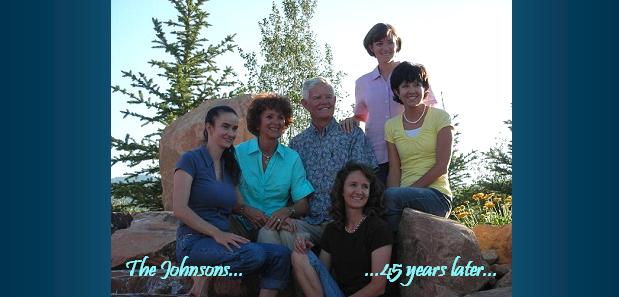
Rebecca, Lawana, Dick, Julie, Shelly and Sheri

Another Year in our Lives

Showing posts with label Safari. Show all posts

Saturday, October 24, 2009

MISSIONARY APARTMENT AND SAFARI 3rd of 27 Emails

Hi Everybody from Africa!


Our time here in Mombasa has been living in two different locations: Several weeks in Corwin & Peggy’s missionary apartment and one week in the Royal Reserve Safari Lodge on the Indian Ocean beach which we traded a timeshare week for. Both are special places which we will never forget.


The missionary apartment overlooks the beautiful Tudor ocean channel high above the water. Every morning there are beautiful sunrises and sunsets as we look across the channel to the mainland and beyond to the bush. Small fishing dugout canoes go back and forth and fishermen throw their nets out at low tide. Palm trees line the shoreline in this fairly well-to-do area, although it is only about a ½ mile from a large slum. That’s the way the entire island city is…a mix of nicer areas with poorer areas and slums and the bustling city in between. We drink only bottled water and use our water purifiers when bottled water is not available as we travel to the villages and in the bush.

The apartment is gated with a guard, so we feel relatively safe, although we definitely do not go out at night. We don’t risk buying any food from the small stands that line the streets, except for bananas. We would never buy meat from those stands which are swirling with flies. We shop at a nicer market, but still avoid many foods there, even disinfecting fruits and vegetables at home that we get there. The basic food in Kenya is a maize (corn) porridge. It makes us feel guilty when we think about the food we eat and waste at home in America. Compared to the regular elders’ apartments throughout the villages, this apartment is luxurious, complete with what we consider basics, but Kenyans consider luxuries only for the rich (washing machine, dryer, electricity, running water). Yet, there are beautiful homes along the beach here and very nice resorts.

Communications and finances is a major time-consuming issue as there are no land lines and we have to regularly go to ATM machines to get Kenya shillings. We weren’t surprised to have to pass armed guards at the bank after we had already done that in front of the market! Surprisingly, many of the people carry cell phones, which the gov’t subsidizes and saves us much time. This program would take 100 times longer without cell phones, because hardly anyone have cars, only a few have bicycles, and most travel miles and miles anywhere on foot, sometimes barefoot in the dusty red dirt. Few have computers, of course.

Driving is a major concern through the bustling, bee-hive like confusing traffic. It is a mixture of cars, mostly driven by rich Muslims and Indians, taxis, Tu Tu’s, a tricycle scooter motor cycle and matatu’s, which are communal vans with a driver and hustler leaning out the window trying to lure in passengers. The streets are narrow, usually with no sidewalks, and lined with small stands selling food and everything else you can imagine.


Many of the goods are just spread out on the ground. We have to be very careful to avoid an accident, because the white person is always in the wrong and usually whisked off to jail, where it usually takes a bribe to be turned loose for small fender benders. It can be prison for more serious accidents. We did not see another white person for the first week here.


Muslims are everywhere because Mombasa has the largest concentration of Muslims in Africa. They are the dominant religion, but we were pleased to find also a lot of Christians, mostly Pentecostal. The Muslim calls to prayer occur regularly throughout the day and we also have the unique opportunity to be here during the closing weeks of their 30 day Ramadan time. The women are in long black burkas, many with only their eyes showing and they usually walk several steps behind the men. Some wear beautifully colored scarves with the tips of matching dresses showing at the bottom. It’s fun to watch the people stare at us because they see so few whites.

We’ve stayed one week at the Royal Reserve Beach & Safari Resort, a beautiful resort along the Indian Ocean beach which we traded a timeshare week for.

It’s only ½ mile along the beach from the Israel resort which was bombed by terrorists in 2002, killing around 20, including some Americans. It really hurt tourism and the economy here for several years thereafter.

The resort is beautiful and luxurious with pools, 5 course dining, and entertainment.

Our room overlooks the beach with palm trees swaying in the winds and gorgeous sunsets. “Beach boys” walk the beach trying to get tourists to take a walk on the reef at low tide and go on day trips at lower prices than the resort. Corwin and Peggy stayed with us here several nights, which was nice for them to enjoy.


We weren’t able to enjoy a full week’s vacation time here like we usually do at a resort, because much of the time was working on the measles campaign, but the luxury was a nice break for them and us. A nice highlight was our inviting Khulda, the Mombasa Red Cross Director, and her fiance here for dinner one evening. She is a tall, stately, elegant lady, around 30 years old, who has been an enormous help to the program.

We were curious to meet her fiance and to see how they interacted because she is so intelligent, educated, and professional. We were pleased to find him quite modern as we quizzed him about marriage and women and are hopeful he will remain that way after they marry. We wish we could stay awhile, because she has observed our ways and asked some questions about the Church and our views on women, marriage, and family life.


We have great admiration for Corwin and Peggy’s mission and dedication, especially because their days are jam-packed with the work, leaving them and now us exhausted at the end of the day. Yet, their phone keeps ringing long into the night with emergencies and crisis-solving. It’s hard for them to be organized and plan and set priorities because so many of their contacts are backward, poor, uneducated. Yet, the thing that keeps them and us going is the great goodness of the people and the benefit our program is to them and their sweet little children.
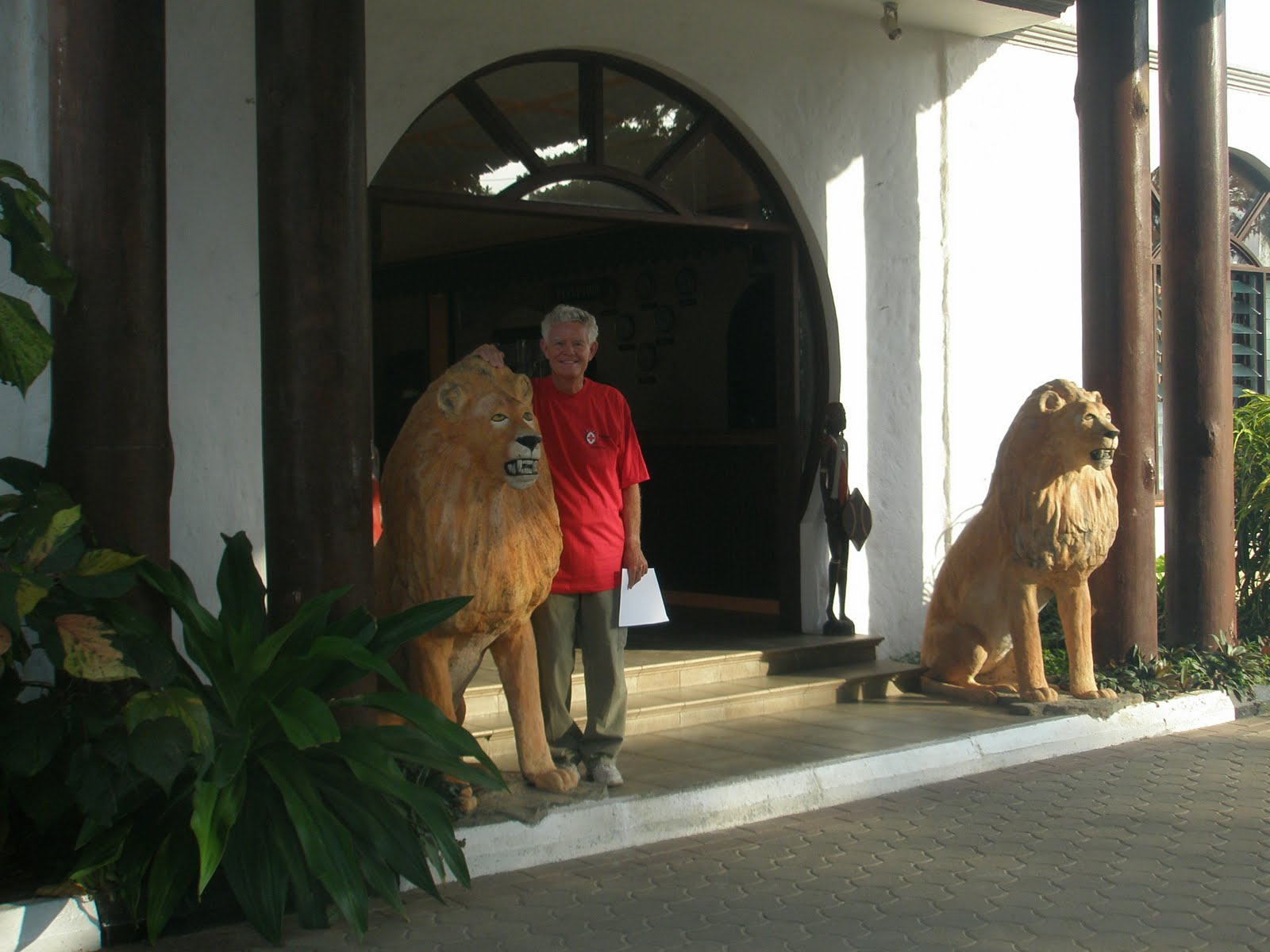
Well, we’d better close for now. It’s time to go out to another measles clinic

We miss you all….and, send you our love from the dark continent,

Dad & Mom/Grandpa & Grandma/Dick & Lawana


NOTE: To continue reading the African Blogs, scroll down or click on the "older post" on the right.

WASSANI ISLAND 7th of 27 Emails

“Jambo!” (“Hello!”) from Africa!

We had an interesting day today seeing and doing things different from what you usually think about Africa. We went snorkeling and chasing dolphins off the beautiful Africa coast! It started with a drive along the southeastern coast south to the little coastal village of Simone where we took a small dhow boat out to the beautiful island of Wassini.


We took along Joseph, the young African returned missionary who has occasionally served as our taxi driver here in Mombasa. Of course, we paid his way, because he could not afford such a thing and, frankly, his unique experience there was an opportunity of a lifetime for him.


In fact, a sad fact we learned quickly here is that people from all over the world come to Africa to see the animals and the rest of this fantastic country, but few Africans themselves have ever gone to the reserves themselves or other wonderful tourist places because they can't afford them because they can hardly afford their daily food for their families.

It was fun to watch Joseph's pure joy throughout the day. He's one of those great young men who very likely sacrificed the hope of college and other material things here forever to serve his mission. But, he's the very first to quickly say it was worth it and he would do it again in a heartbeat. He also strongly tells how the mission greatly broadened him in many ways and strengthened him spiritually.


Now, he's looking for his eternal companion, which is tough here because there are so few members of the Church.

Simone is famous for it's slave cave where the Arabs herded the hinterland slaves into before loading them on ships to use or sell elsewhere. It's a huge old lava cave which begins a short distance inland and goes outward to the beach and water. There are also old slave holding buildings in the old town and stands where slaves were held, bartered, and sold like cattle. The Arabs were the worst doing this, whereas the Portuguese discoverers originally came for discovery and the Brits to hunt, colonize, and missionary work. The Arabs and Indians also began the ivory trade which almost decimated the elephant and rhinos.


The Indian Ocean is wonderfully warm, although these particular beaches are not as clean as the Caribbean Island beaches we are accustomed to. Some of the coral was unusual, especially a beautiful large purple type that looked somewhat like cauliflower. But, the fish were much less than the Caribbean. However, we did see an octopus, a sting ray, and a moray tiger eel.


Especially exciting was chasing pods of dolphins, which were plentiful and unafraid of the boats. The dhow is a unique African vessel which is the main fishing boat here. On this poor island, fishing is practically the only food. However, the drive down the coast was green and beautiful with gardens, small farms, and coconut groves everywhere. It was a prime example of how rainfall and water greatly changes everything for these people, making their life better than those in the higher lands where drought brings a very tough life and even starvation for many. At least the poorer people here have fishing and gardens.

We walked through a unique dry land choral garden...acres and acres of huge coral heads, many several stories high, all inland in a huge forest of coral heads. It could have been a setting for some science fiction movie...almost spooky. Toward the sea from it was acres of mangrove trees with their protruding “knees” coming up from their roots to get oxygen. Twice every 24 hours the tide would come in flooding it all, and then go out again. Seeing the mangroves reminded me of how our Caribbean yacht club moves the yachts into the mangroves to protect them from hurricanes.


We visited a little school in Wisome.It was about the size of our bedroom at home...no desks, dirt floor, few books, no water...of course, no windows or door, as usual, but it at least did have a roof made from old corrugated tin and partly by a rusty old car hood. It was packed with around 20 little 5-6 year olds and their smiling teacher who led them in a Swahili thank-you song for us after we had given them candy, pencils, and notebooks. How beautiful they were! They were all dressed in little blue and white school uniforms, which their parents must have somehow acquired the money to pay for.


The government finally made it a law that children should go at least to elementary school and the people, especially the mothers have enthusiastically responded to that challenge. They see education as their way to progress and even require children at school to learn and speak English. The Church branches do the same. It's kind of sad in a way, but the fact is that speaking English brings them closer to the world and progress.


We had our most African lunch of all at the best restaurant in town...different kinds of fish barbecued heads and all; sea grass salad; coconut dishes; maize meal; etc On the way we passed the best little hotel and looked inside. You would probably not have wanted to stay there, but they took great pride in it's “luxurious” amenities to it's guests.


Driving back was again an adventure as we arrived in the dark. Along the way, we passed through the usual herds of goats on the roads and even a camel herd. Cattle was being driven out in fields and people were cooking their dinners, many over campfire like stoves outside their little homes. Laundry was hanging on lines everywhere or being dried laying in a field.


Again, we passed several Muslim mosques, some quite beautiful with their round roofs and stretching towers. We've gotten used to the loudspeakers in the city regularly calling out the people for prayers. Some of the voices are quite beautiful and we've even got used to recognize several of them. On the closing evening of Ramadan there were huge celebrations everywhere. They were dressed in their finery, although it was sad that the more conservative women had to hide their beautiful dresses and jewelry under their black burkas. However, some of the burkas allowed fine silver and gold applications to the sleeves and hems and tops. Celebration music was playing everywhere. We wished we could have joined the parties!

Must close for now.

Love you all,

Dick and Lawana

NOTE: To continue reading the African Blogs, scroll down or click on the "older post" on the right.

HALLER PARK IN MOMBASA 9th of 27 Emails

Jumbo!” Again from Africa!

We had a great time today visiting an outstanding reclamation project here in Mombasa. It's called Haller Park and is a huge game reserve covering miles of square miles that was done by the major cement company in the area to help reclaim the pits they dug for cement dirt on one little part of the park area.


A great example of cooperation between business and government to reclaim land and provide one of the best natural tourist attractions in Africa. Amazingly, once you are inside the gate, the venues to see the animals are so natural you could hardly tell it from the wild bush at times.


Yet, it was much safer than the wild. Even so, you never had any feeling that it was like a zoo. America could take some lessons from here on how to develop it's zoos.

Everywhere there were huge full clam shells, some as big as ½ a Volkswagen beetle. They are all fossilized along with big trunks of trees.


This place was once part of the sea as it is along the coast. Baboons and monkeys were running everywhere around and we walked through gazelles, giant turtles, elephants, etc.


The giraffes we fed were behind fences and the hippos were below us in the water, unfenced, but with a pretty steep slope which they would have had to climb to get at us.


A fascinating true story known worldwide is of the giant tortoise, Mzee, which we fed and scratched his long neck and head, and Owen, the baby hippo, that became her baby when the little hippo was orphaned. At first Mzee didn't accept the 600 pound baby turtle trying to nuzzle into her and sleep with her. But, over time she adopted him. The pictures of them together doing those times are fascinating.


Now, of course, the 2000 pound Owen lives elsewhere here, but it's a wonderful example of animal love and adaptation that people could learn a real lesson from.

The national game parks and reserves, of course, are the prime places for seeing animals, especially the big cats...lions, leopards, cheetahs, etc.


But, it's been very interesting to us to see many elephants, giraffes, zebras, and especially monkeys, baboons, exotic birds, etc many places we go in the countryside. And, it's common to hear real life stories from village people about their encounters with those animals...some of them ending in loss of life...and, especially them losing gardens and water and sometimes their little huts to the animals.


It is easy to see why the average African often doesn't like the animals.


Many of them have never been to a game park or stayed in a luxurious tent in the bush. And, as the population grows into the bush, it makes their homes closer to the animals and possible death.

So, there's little benefit to the villagers and bush people, except when they can occasionally kill an animal for food and even that is outlawed most places. Some government and non-profit programs have been set up so the people benefit from the park tourist economy, which helps the people be more accepting of the white tourists flocking here, but sometimes leaving little in return to the people themselves.

Tourism has become Africa's biggest asset, so it's very critical that the people somehow support it. And, it seems to be working better here than other countries we've visited around the world, because we generally feel a much more genuine friendliness and less resentment from them than we've felt in most other continents and places we've seen around the world.

I think that's also because of the deep, genuine kindness and friendliness of the African people.


We think of you each day and our prayers are said for you. We hope all is well at home and are grateful we can communicate at least by e-mail. There's little regular mail here. What there is takes weeks and weeks. It continues amazing how, even in the 2nd largest city where conditions are better than anywhere else, the simplest little things we take for granted back home are often not available. So, we count our blessings much more now.

Love to you all,


NOTE: To continue reading the African Blogs, scroll down or click on the "older post" on the right.

Thursday, October 22, 2009

MAN EATERS LODGE AND SECOND SAFARI AT KILAGUNI 14th of 27 Emails


Hi again from Africa!

We were able to take a weekend off from our measles work and had a fantastic time on safari in Tsavo West. We first visited the Maneaters Lodge, site of the killing of around 140 railroad workers by man-eating black-maned lions in the late 1800's when the British were building the first single gauge railroad across Kenya to Uganda. The book, “The Lions of Tsavo” chronicled the terrible happenings and it was then made into a movie called, “The Ghost & the Darkness” several years ago, starring Michael Douglas and Val Kilmer. It was a bit spooky walking around the beautiful lodge, safari tents, and beautiful grounds along the Tsavo River, which is fed by Mzima Springs, also a major water source for Mombasa. If you saw this at times terrifying movie and true story, you may feel a little how we felt as we saw the water tower, tracks, and terrain surrounding the area where the lions hid before killing their helpless victims. Although I wanted to stay there in it's safari tents along the river, I really wondered how safe it would be even today!

On we went to again stay in the beautiful lodge in the heart of Tsavo West, Kilaguni Lodge. Kilaguni means 'small rhino.” Since beginning our “vacation mission,” this was only our second safari and game drives and they could have not been better!!! Kilaguni is world famous for it's gorgeous, 5 star lodge overlooking a great
waterhole...and, on our two days there and on the drives we again saw many herds and small groups of elephants, cape buffalo, zebras, all kinds of gazelles, antelopes, onyx, water bucks, etc etc.


We saw around 100 giraffes, many ostrich, hippos, hyenas, jackals, wild dogs, vultures feeding on kills, baboons, monkeys, warthogs, impalas, white -tailed mongoose, and too many other birds and animals to list or that we didn't know the names of. But, still no rhinos, pink flamingos, or cheetahs yet! So, we have seen all the Big 5, except for the rhino so far, plus practically all the other animals there are to see.


Some highlights included:
• A pair of ostrich with 8 babies the size of small chickens. The black and cream colored Alpha male was strutting his stuff while his mate, who nests all the eggs that he has sired from different females, stirred around keeping the young ones from straying too far.

• A night game drive, which most people seldom are fortunate to do, hunting for big cats and other animals by night by spotlight.


During that sometimes scary, but thrilling time, we were very blessed to see a baby elephant with it's umbilical cord still attached, so it was only a few days old. Remarkably, and very different from the daytime, the mother seemed quite unafraid, perhaps because the birth was such a short time earlier. The little guy could hardly walk as he tried to stay underneath her and as we were only about 2 truck lengths away!

Cevit cats, hyenas, jackals, were skulking as we drove through the bush and we flashed on many, many eyes glowing in our light. It was really erie and made us appreciate even more how terrifying it must be for other animals during the nighttime when the big cats are hunting... especially the mothers trying to protect their precious little babies.

We are seeing little babies everywhere, because it is springtime here in Africa, a glorious time to be here among the babies being born. It's especially fun to see the babies of the big animals, like the elephants, cape buffaloes, zebras, hippos, lions, etc before they get so huge. And, the baby baboons and monkeys riding along underneath or on top of their mothers are so very comical!


Herds of elephants rolling in the mud in the waterhole. And, scratching themselves on the rocks. Then, walking away and sucking up red dust and swooshing it back up over their huge bodies. The matriarchs are very protective of their little herds, driving away both big and little bulls. There's no question who is boss. It was sad to see a very young adolescent bull come in all by himself and get pushed around by the herd. He followed the herd on the fringe, obviously wanting to be included in, but they would not let him.

We wondered how long he would survive, because it's the young, the old, and the sick who become kills for the big cats of the night. Pretty sad...the “law of the jungle.” And, as we do the game drives and just drive the bush ourselves, even outside the national parks and reserves, we see the evidence of kills everywhere...carcasses, bones, etc. Sleeping at night with our own veranda balcony open to the sounds of the night and the cool African breeze. It's rather unnerving, knowing what's out there. But, I also have to admit within a desire to walk the bush (with a very big gun, just in case). But, not at night, of course!

We'd better close for now and get to bed for tomorrow's 6 AM game drive. We love it here and it's been nice to spend a few days seeing this unique, exciting part of this great place in the world. We send our love and best wishes to you all.

Dick and Lawana


NOTE: To continue reading the African Blogs, scroll down or click on the "older post" on the right.

FINCH HATTON LODGE & DRIVE TO NAIROBI 15th of 27 Emails‏


Dear Family & Friends,

Thanks to many of you who have responded to our e-mails. We are very glad to hear things are going well for you. We've been gone over a month now and it seems like years! It's hard to imagine it's Fall back home when it's Spring and warm here in Kenya. Please don't forget us. We think of you often!

Returning from safari, we had a memorable time visiting the Finch Hatton Hunting Lodge in Tsavo West. Denys Finch Hatton was the big game hunter character Robert Redford played in “Out of Africa.” The movie came from Karen Blixen's book, who was played by Meryl Streep, a true story. We love this place which is green and luscious, with ponds and streams fed by springs from Mount Kilimanjaro. It's quite different from the Kilaguni area and much of Tsavo West, because of the abundance of water making it like an oasis, especially in the current drought conditions. Around 60 hippos, many crocodiles, and lots of all the other many animals and birds we've been seeing abound here. You can see why Finch Hatton made it his big game hunting home and why Karen Blixen fell in love with it and with him as well. It's luxurious tents along the streams and ponds go for about $600/night, so we didn't stay here, of course. But, we loved touring the lodge and grounds and especially seeing all the artifacts from the late 1800's and thinking about that great movie. You definitely would not walk outside of your tents at night in this place!

We left Tsavo West and headed on a long drive to Nairobi. It was a wonderfully beautiful drive as we decided to avoid the busy Mombasa Highway and, instead, go high over the mountains through Mackochos. After spending so much time in the dry Mombasa and Chylu Hills areas, it was great to see these beautiful green valleys, hills, and mountains. There were terraced farms, gardens, and orchards, all made possible by rainfall and water. It was interesting, though, that even here trenches in long rows were being dug to help catch more of the Spring rains that all are hoping will come soon, especially those in the dry flatlands below. Just because of the greenery, it all seems more happy, peaceful, and prosperous. And, it probably is, even though many of the people living here would be considered poor by American standards.

Along the way we visited another Red Cross “office” which had worked on the measles program. Very dedicated people...and, very appreciative of our work and proud of the great work they had done themselves. It was wonderful to feel their love for us and the gratification that comes from service in a common cause, even though we are from different races, countries, and cultures.
We'd better close for now. We'll be up in the morning around 6 AM to go with Corwin and Peggy to see the Mission President. This mission covers Kenya, Tanzania, Uganda, and Ethiopia, one of the largest missions in the Church.
We love you all,
Dick & Lawana

NOTE: To continue reading the African Blogs, scroll down or click on the "older post" on the right.